
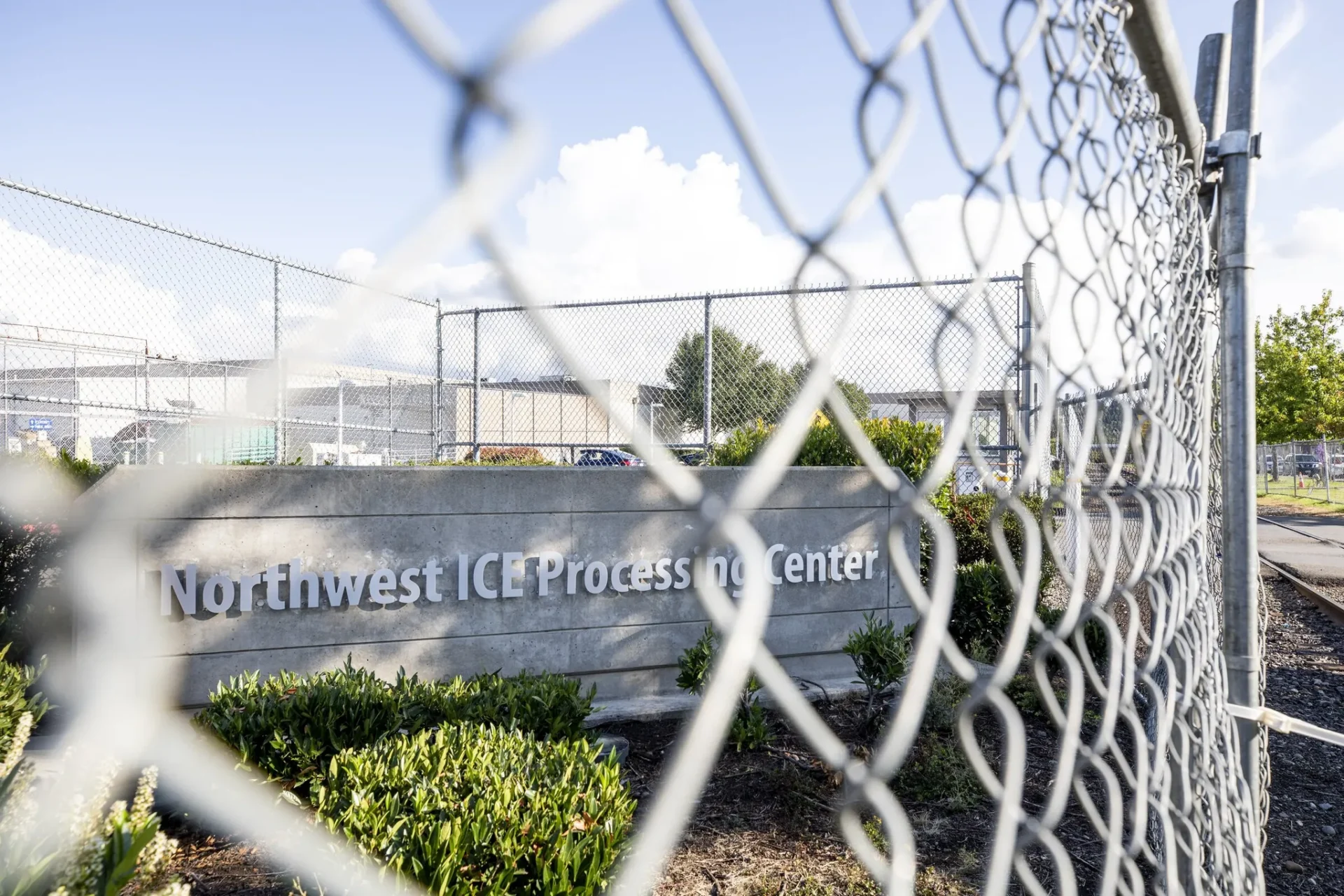
His wrists in handcuffs, Mo begged the federal agents to let him bring the baby formula home to his son.
It was the morning after Christmas and Mo had awoken early to make the roughly one mile drive from his Auburn home to the grocery store. He was still in his pajamas when, on the drive back, he saw them in his mirrors — the flashing lights of five SUVs driven by federal immigration officials. Within seconds, he was arrested.
“Even when they stopped me, I was thinking that I did everything right,” said Mo, who asked to use just his first name for fear of jeopardizing his ongoing immigration case and putting his family at risk.
The Palestinian immigrant’s story highlights new facets of how President Donald Trump’s immigration crackdown is playing out in Washington state. Asylum-seekers with no criminal record are being detained, even as federal officials claim immigration agents are targeting “the worst of the worst.” Mo was arrested in a traffic stop, which appears to increasingly common. And it’s possible state driver’s license data aided in his arrest.
Mo arrived in the U.S. in early 2024 with his wife and firstborn son from the West Bank, entering legally with a tourist visa. Soon after, he said, he applied for asylum and his case remains pending. Under U.S. law, he has permission to remain in the country while his asylum application is processed, said his attorney Hannah Vickner Hough, who works at the Muslim civil rights organization CAIR-WA. Being deported from the U.S. would be catastrophic for his family, Mo said, and could leave him stranded in a dangerous situation abroad.
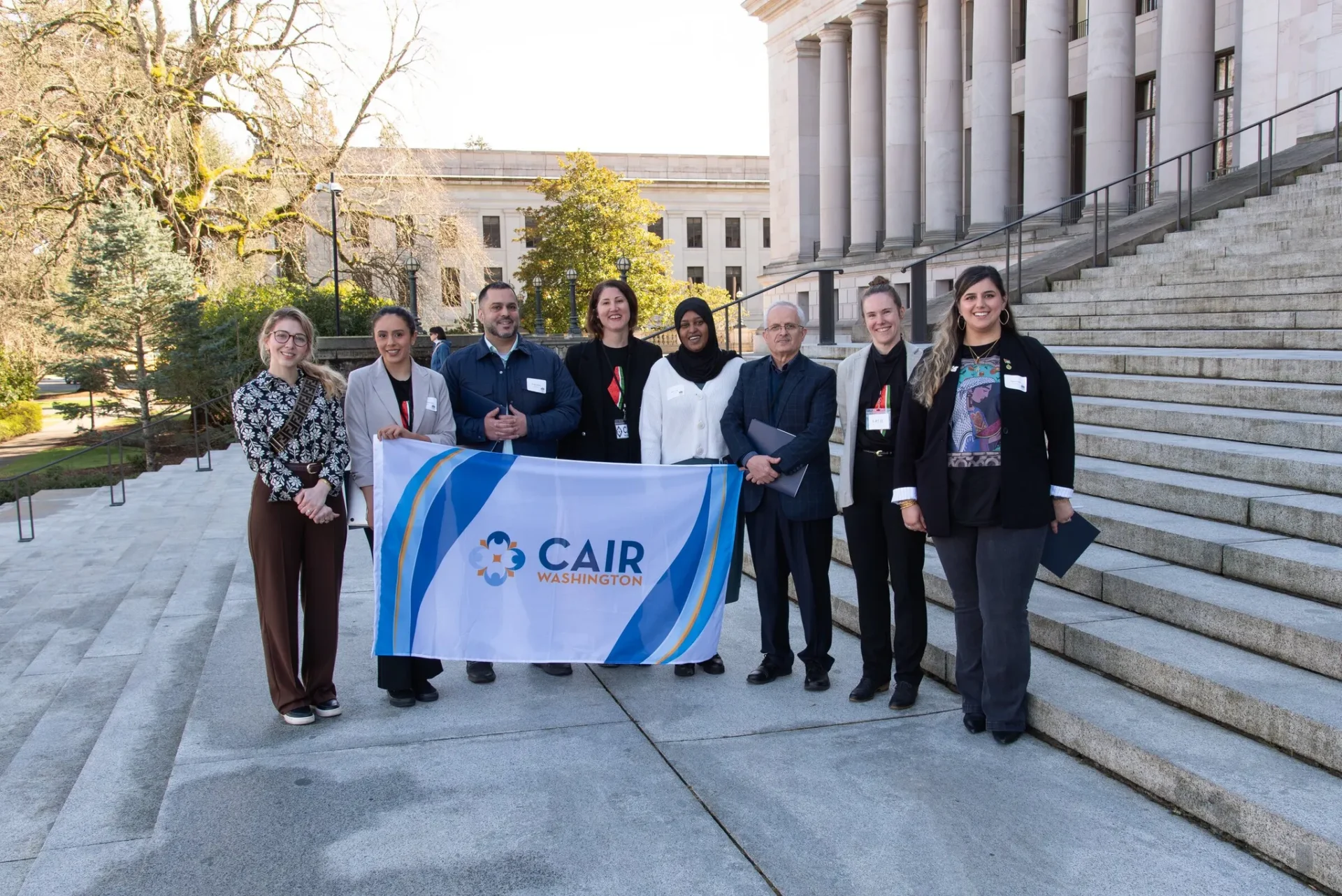
Staff members of CAIR-WA, a Muslim civil rights organization, stand outside the state Capitol in Olympia in February 2025. The organization has advocated before state lawmakers against the Trump administration’s immigration enforcement efforts targeting the Muslim community. (Courtesy of CAIR-WA)
When U.S. Immigration and Customs Enforcement agents and other federal officials pulled Mo over just minutes away from his home, he was in disbelief.“We didn’t think we were a target,” he said. “We thought we were safe because we did it the legal way.”Mo and his wife had already been interviewed at the U.S. Embassy in Jerusalem for their tourist visa, and were reviewed again when they landed in the U.S. When he filed their asylum application, the couple submitted numerous personal records. Mo has also already secured his permit to legally work in the country. U.S. immigration officials “have all our information,” he said. They know he has no criminal history in the West Bank, he said, where he worked as a jewelry smith.
He thought he was just awaiting his interview, which could take years before being scheduled. In December, the Trump administration halted processing all asylum cases. Before that, the immigration court system was already bowing under a backlog of more than 3.4 million asylum cases. But Mo remained hopeful he would eventually be able to build a permanent life here in the U.S. with his family, which now includes a second son born late last year.
Federal agents have arrested a number of asylum-seekers in the Seattle area in recent months, though such detentions have historically been highly unusual, said Vickner Hough.
“My attorney colleagues, none of us have seen this before,” Vickner Hough said outside the detention center in Tacoma last month. “It appears that there’s some targeted effort to arrest and detain visa overstay individuals regardless of what type of relief they’re pursuing.”
In July, a theater manager of a Kirkland high school who came to the U.S. on a tourist visa and later applied for asylum was detained by ICE officers. Fernando Rocha was later released on bond.
Most people in Washington detained by immigration enforcement officers in recent months have been arrested through traffic stops, said Brenda Rodríguez López, executive director of the Washington Immigration Solidarity Network, which operates a statewide hotline tracking ICE activity.
In the first nine months of Trump’s second term, ICE arrested nearly 2,000 people in Washington, according to the latest figures from the Deportation Data Project, compared with about 800 people during the same period the previous year.
Mo’s arrest could also be another example of federal agents using Washington state driver’s license data to carry out an arrest. His arrest document includes details consistent with other arrests in which federal immigration agents have done so, said Vickner Hough, who had researchers at the University of Washington Center for Human Rights review Mo’s case.
A January report from the center found nine cases in which a driver was subjected to an immigration-related arrest between August and November after federal agents searched their license plate number in a national data-sharing platform called Nlets. That system can draw information from state-level systems, including Washington state’s Department of Licensing database, despite efforts by lawmakers to restrict immigration officials’ access to such data.
Because of the arrest, Mo’s pending asylum case will now move out of U.S. Citizenship and Immigration Services jurisdiction, where he could have pleaded his case affirmatively through paperwork and interviews, and into immigration court, where he’ll have to defend his case in more pressurized hearings. Mo said he has yet to receive notice of his next hearing.
“I came here to seek safety for me and my family,” he said. “I don’t feel safe anymore.”
If Mo were ordered to be removed from the country, it’s unclear where he would be deported to. The U.S. does not recognize Palestine as a state, and the Department of Justice labeled Mo’s country of origin in court documents as “unknown.” The U.S. last month deported eight Palestinian men to the West Bank by private jet through Israel, and a similar flight was made this month, raising concerns among immigration attorneys about the potential for harm or persecution during the transfer.
Returning to the West Bank would poses its own dangers, Mo said. He and his wife applied for asylum in part because of ongoing harassment and violence by Israel Defense Forces soldiers in his hometown. He said he and his son were once heading into a pharmacy to purchase urgent medicine when a soldier threatened to kill Mo if he didn’t stay in his car and drive away.
As soon as Mo was pulled over and showed federal agents his ID, they told him to step out of the car. Officers told him he was under arrest and grabbed his phone and watch, he said, then handcuffed him.